It is 10:40 on a Tuesday. There is a wet doodle in the tub, a phone buzzing with a new booking request, and a note somewhere about how this dog's mom said, "last time she was nervous." The question is not whether you can handle all three. You can. The question is whether you can find the matting note, the owner's comment, and the open slot on Thursday without leaving the tub, drying your hands, and flipping through three places.
That is really what dog grooming business software is for. Not a feature list, not a scheduler with extra tabs, but one place where a day's jobs, a pet's history, and the owner's instructions stay attached to each other.
In this post, we will walk through a fictional Tuesday in a one-chair salon: the booking request that arrives mid-bath, the matting note you need with wet hands, and the owner comment that has to stick to the pet. You will see what one system absorbs and what still needs you, then how to judge any system in five minutes, using the test that matters more than a feature list.
Software Is a Set of Jobs, Not a Feature List
Software is a set of jobs, not a feature list. A day's appointments, a pet's history, and the owner's instructions should all stay attached to each other, and the only test that matters is whether the detail you need mid-groom is findable in seconds.
Your setup is probably a one-chair salon or small shop: a paper planner, a notebook of pet notes, a spreadsheet of prices, and texts scattered across your phone. That is not a criticism. It is the starting point most groomers share, and it is exactly where software made for what happens between drop-off and pickup can earn its place.
Here is the through-line for everything that follows. The doodle's matting note and the owner's "last time she was nervous" comment are only useful if they surface at the moment you need them, which is with a wet dog on the table, not after the fact. More time with dogs and less time hunting for details is the whole promise.
One honest note: the Tuesday walkthrough in this article is illustrative, built from everyday salon situations rather than a real client record. Treat it as a worked example of the jobs, not a testimonial.
The Booking Request That Arrives Mid-Bath
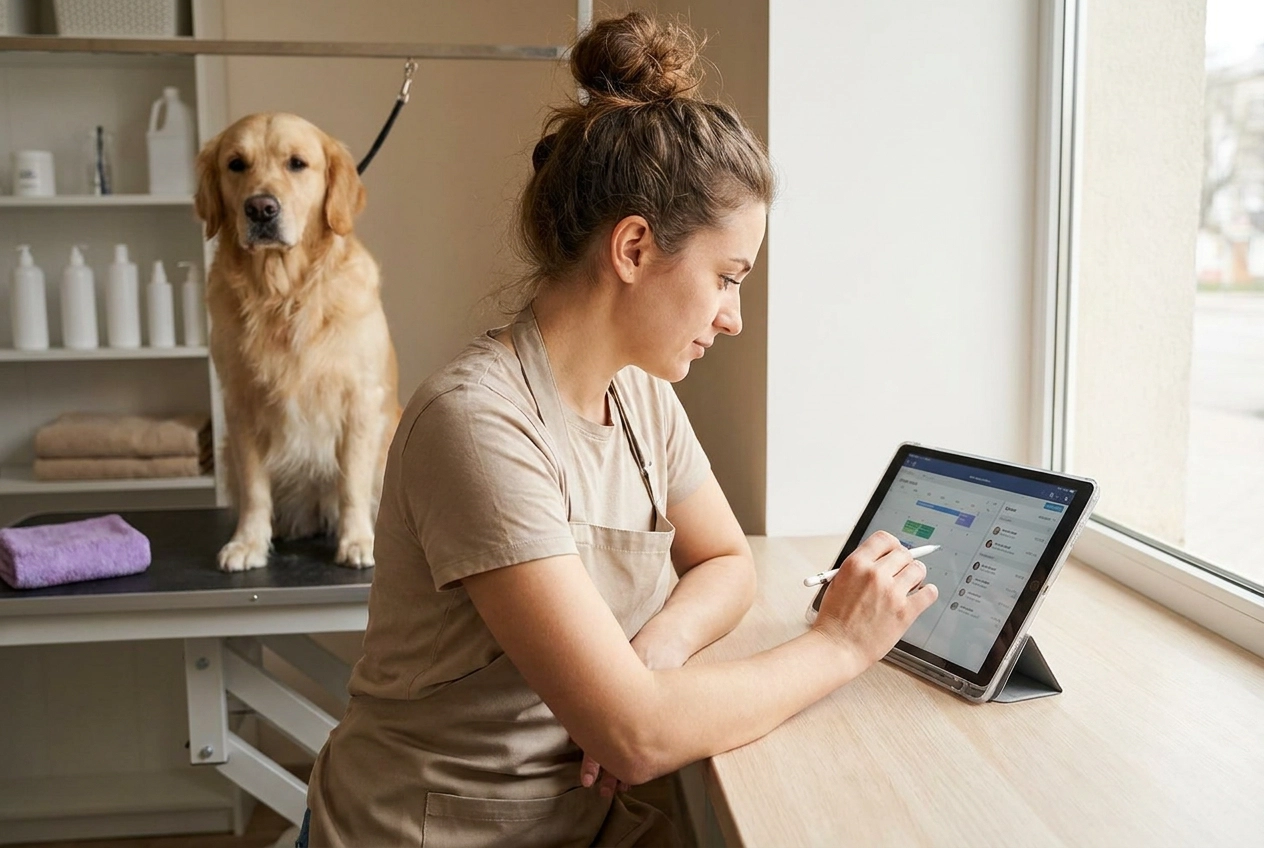
It's 10:40 a.m. A standard poodle is in the tub, your hands are wet, and your phone buzzes. A new client wants Saturday. This is where a paper calendar breaks down. You cannot dry a dog and write in a slot at the same time.
When a customer submits your GroomTrack booking form, the request includes the information they entered about themselves and their pet. You can review it when you are ready.
The judgment call stays yours. Does a first-time doodle need a full groom slot or a longer first-visit block? Is there really room Saturday? Does this client fit your book at all? Software can hold the request. It cannot decide who you take.
GroomTrack keeps requests submitted through your online booking form together for your review. Texts and phone messages do not automatically appear in that queue. If a customer contacts you that way, you still need to enter the appointment yourself or direct them to your booking link. You decide whether to approve an online request, subject to your booking settings and availability.
So here is the test. When the request arrives mid-bath, can you see it, park it, and get back to it in under a minute without leaving the table for a computer? If yes, the system is doing its job. If you have to dry your hands, open three apps, and remember to answer later, it isn't.
The Matting Note You Need With Wet Hands
The booking request is handled. Now the dog is actually on your table.
A goldendoodle comes in for a routine trim, and the coat is tighter than last time. You find matting behind the ears, under the front legs, and along the tail. That is a decision to make and an owner conversation to have.
Care starts with what you know. A pet record holds the last visit date, the length and blade you used, the coat condition you noted then, and whatever shave-down or dematting conversation happened with the owner. A photo from that groom does more than a paragraph of description ever could.
Say you are holding the clipper, wondering what length the owner agreed to last time. That answer needs to be on a screen you can glance at, not in a binder across the room with wet hands.
Write the note once, right after the groom, in the pet's record. Notes reconstructed at the end of the week are worth less, because you remember the coat and the behavior while it is fresh.
That matting note does follow-through work. It informs how you book that dog next time, whether that is a shorter interval or a longer appointment block, and it gives you something concrete to show the owner at pickup.
In GroomTrack, pet records and grooming notes hold this detail, and pet alerts keep handling needs visible. Before-and-after photos saved to a groom record can be viewed with that visit in the pet's grooming history.
The Owner Comment That Has to Stick to the Pet
At drop-off, the owner says it in one breath: "Last time she was nervous, so I gave her something this morning." That is not small talk. It changes how you approach the whole appointment, from how you lift her into the tub to how long you let her settle before the clipper starts.
Record what the owner reported in the notes for that visit, including the date. Keep ongoing handling needs in the pet's profile, but do not turn a comment about medication given that morning into a standing instruction for future visits.
This is where client notes and pet notes need to stay separate. The household has preferences, contact details, and payment habits. The pet has temperament, coat, and handling needs. Folding both into one long text note is how "gave her something this morning" ends up buried under a reminder about parking.
At pickup, the same record earns its keep. Your grooming notes and before-and-after photos sit together in one place, so the conversation at the counter is specific. You can show the owner what you saw and explain what you did, which is often where rebooking happens.
An owner instruction that takes four minutes to find is one you will skip on a busy day. The real measure is whether it appears the moment you open that pet's record. GroomTrack keeps pet alerts and grooming notes in one spot, which is a place for the handoff details between drop-off and pickup.
What One System Absorbs and What Still Needs You
Here is the useful way to look at that Tuesday: split it into two columns. Absorbs: the day's appointment list, booking requests waiting on your review, client and pet records, grooming notes, pet alerts, service and pricing details, reminders, and the report of what you actually did last month. Stays human: reading the coat, deciding whether a dematting is fair to the dog, talking an owner through a shorter cut, calming a nervous pet, and choosing which clients you take on Saturday.
That dividing line is the whole argument. Software that tries to take over the judgment calls gets in your way. Software that holds the details so your judgment is better informed earns its place on the table.
Now test it. Pick the one detail you look up most often, whether that is a blade length, an owner's handling note, or a price. Time how long it takes to find today. Then time it in any system you are considering.
Two checks: can you find it with one hand and a wet dog on the table? And does the detail stay attached to that pet, or does it live in a text thread you will scroll past next month? That is the goal: less searching between appointments.
Reports are the end-of-month version of the same idea: how many appointments you completed and what services made up your week turns a vague feeling about the business into something you can look at.
How to Judge Any System in Five Minutes
The five-minute version starts before you open a single product page.
Write your jobs down as they happen. For one day, jot each task the moment it lands: the booking request, the pet note, the owner instruction, the price, the reminder, the record of the groom. That list is your actual requirements. It will not look like a feature chart, and that is the point.
Judge against those jobs, not the feature count. A long list answers nothing about whether the matting note shows up when you need it. Ask whether the detail you look up most often is one or two clicks away.
Look for one place, not several. If appointments live in one tool, client details in a spreadsheet, and grooming notes in a notebook, you are still the system, holding it together in your head.
Check the record structure. Client records and pet records should be separate and linked. A household can have two dogs with completely different coats and temperaments, and one long text note buries both.
Ask where the software came from. GroomTrack was created by Nancy, a groomer with more than 15 years of experience, and its slogan is "Software that thinks like a groomer. Built from behind the grooming table." Software that remembers your dog shows how that background shapes the record, and it is worth asking any vendor who designed theirs.
Keep the decision small and reversible. Move one job, such as booking requests or pet records, out of paper and into the software. Judge whether your Tuesday got easier before you move the rest.
Start with the details you need every day
Choose one task you want to make easier, such as reviewing booking requests or finding the notes from a previous groom. Try that workflow and see whether the information is clear and easy to find.
GroomTrack brings appointments, online booking requests, client and pet records, and grooming notes together. Explore GroomTrack's features to see how they could fit your salon.